Explore our inventory of traceable, high-surge silicon zener diodes, fast-recovery rectifiers, and high-voltage power blocks optimized for Seattle OEM and factory system integrators.
A comprehensive examination of clamping dynamics, avalanche breakdown mechanics, and high-energy transient suppression in heavy-duty industrial power networks.
In modern power conversion and mission-critical electronics, transient overvoltage events—caused by lightning strikes, inductive load switching, or Electrostatic Discharge (ESD)—pose existential risks to sensitive semiconductor gates. Transient Voltage Suppressor (TVS) modules utilize specially designed silicon P-N avalanche junctions optimized for extreme surge handling capabilities.
Unlike standard Metal Oxide Varistors (MOVs) which suffer from progressive thermal degradation and possess response times in the nanosecond range (5–25 ns), silicon-based TVS diodes exhibit sub-picosecond response times (<1 ps) to unidirectional or bidirectional voltage transients. When an overvoltage pulse exceeds the breakdown voltage ($V_{BR}$), the avalanche diode transitions seamlessly from a high-impedance state to a low-resistance clamping channel, bypassing surge currents up to hundreds of amperes away from downstream components like microcontrollers, SCRs, and high-voltage rectifiers.
The core metric of a transient suppressor module is its Clamping Ratio, defined as the peak clamping voltage ($V_C$) measured at the maximum peak pulse current ($I_{PP}$) relative to the breakdown voltage ($V_{BR}$):
By engineering ultra-low dynamic resistance ($R_{DYN}$), our TVS module designs prevent localized thermal hot-spotting within the silicon die. This allows repeated high-energy absorption cycles without parametric drift in leakage current ($I_R$), ensuring long-term operational stability in severe industrial environments.
| Suppression Technology | Response Time | Clamping Accuracy | Degradation Mechanism | Junction Capacitance | Target Application |
|---|---|---|---|---|---|
| Silicon TVS Modules | < 1 Picosecond | Ultra-High (±5%) | None (Solid State) | Low to Medium (Customizable) | Mission-Critical Avionics, Signal Lines, DC Bus |
| Thyristor Surge Suppressors (TSS) | < 1 Nanosecond | High (Crowbar Action) | None (Solid State) | Very Low | Telecom, Ethernet, High-Voltage Power Rails |
| Metal Oxide Varistors (MOV) | 10 – 25 Nanoseconds | Moderate (±15%) | Progressive Thermal Wearout | High (>1 nF) | AC Line Input Mains, Heavy Industrial Surge Bars |
| Gas Discharge Tubes (GDT) | > 100 Nanoseconds | Low (Arc Switching) | Electrode Erosion | Ultra-Low (<1 pF) | Primary Outdoor Lightning Protection |
Custom power modules engineered to meet the unique environmental, defense, marine, and computing demands of Washington State’s primary technology centers.
Seattle is global ground-zero for commercial aviation and space exploration. Our military-spec TVS modules are engineered for compliance with DO-160G Section 22 (Lightning Induced Transient Susceptibility), protecting onboard 28V DC bus architectures, flight control computers, and radar arrays from direct and indirect lightning surges.
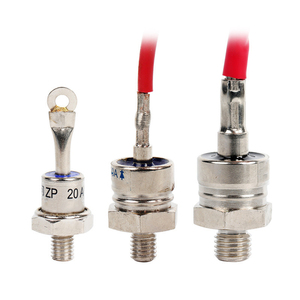
With Washington State Ferries transitioning to hybrid-electric propulsion, marine power conversion systems operate under harsh salt-spray environments and intense inductive switching transients. Our silicon controlled rectifiers (SCRs) and heavy-duty TVS stacks safeguard electric vessel drive inverters and high-current battery charging berths.
From downtown Seattle carrier hotels to major Eastside data center campuses, continuous uptime is non-negotiable. We manufacture low-capacitance TVS suppressor networks that shield 48V rack power distribution units (PDUs) and high-speed fiber transceivers against switching transients and grid harmonics.
Pacific Northwest clean-tech projects rely on megawatt-scale power conversion. Our high-voltage diode blocks and thyristor snubber modules protect heavy electrolysis rectifiers from sudden load dumping and grid feedback spikes, ensuring maximum cell lifetime in hydrogen generation plants.
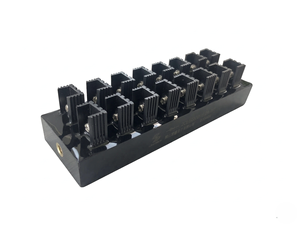
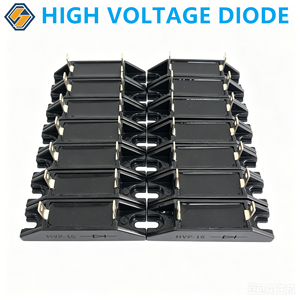
Providing high-voltage silicon stack rectifiers (such as the HVP-16 series) for industrial RF heating, electron beam welding, and plasma etching tools across the PNW high-tech industrial parks. These components handle high current surges while delivering ripple-free power delivery.
Stay compliant with strict North American and international surge immunity frameworks mandated by regional OEMs and government agencies.
As Seattle power designers rapidly adopt Silicon Carbide (SiC) and Gallium Nitride (GaN) power switches for electric vehicles and renewable microgrids, the higher switching frequencies ($dI/dt$ and $dV/dt$) create extreme voltage ringing across parasitic circuit inductances.
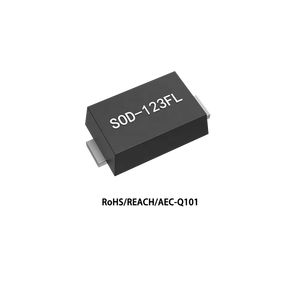
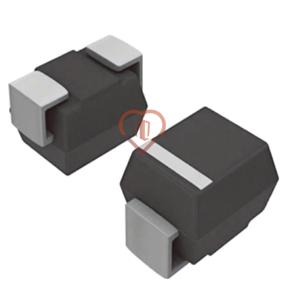
Standard transient suppressors often lack the ultra-low inductance packaging needed to protect sensitive SiC MOSFET gate oxides (Vgs limits are notoriously narrow, often +18V/-5V). Our latest generation TVS modules utilize planar chip layouts and surface-mount packages (SMA, SMB, SMC, SOD-123FL) to minimize lead inductance to <0.5 nH, offering precise gate-clamping defense.
Defines standard surge waveforms (1.2/50 μs voltage, 8/20 μs current) for Category A, B, and C indoor/outdoor electrical distribution networks in commercial facilities.
Governs 28V DC electric power systems in military ground vehicles, requiring clamping of 100V transients lasting up to 50 ms without component degradation.
The benchmark safety standard for Surge Protective Devices (SPDs), mandating rigorous thermal disconnect testing under abnormal overvoltage conditions.
Backed by over 30 years of power conversion engineering, ISO 9001 controls, and rigorous environmental stress testing.
Since 1992, our power electronics designers have specialized in mission-critical power supplies, high-voltage rectifiers, and transient suppression platforms for defense, industrial, and medical sectors.
Every batch of TVS modules and rectifier blocks undergoes full parameter screening, 100% lot code traceability, and automated burn-in tests under strict quality controls.
We configure custom footprint modules, hermetically sealed arrays, and modified-standard electrical specs ($V_{BR}, I_{PP}, C_J$) tailored to proprietary OEM chassis dimensions.
In-house thermal imaging, high-voltage insulation dielectric testing (up to 200 kV), and surge waveform verification eliminate compliance headaches during client product qualification.
Dedicated technical sales and application engineers serve the Seattle, Bellevue, Tacoma, and broader Pacific Northwest manufacturing markets with rapid sample turnarounds.
Direct technical answers to common questions raised by electrical engineers, system integrators, and purchasing managers in Washington State.
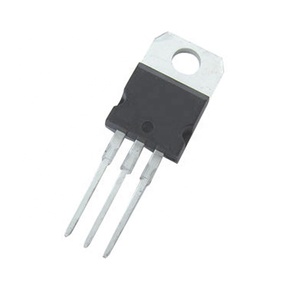
Standard catalog components (such as surface-mount SMA/SMB TVS diodes and TO-220 SCRs) ship within 24 to 48 hours. Custom-configured high-voltage rectifier blocks or high-power industrial suppressor banks typically carry a 3 to 5-week lead time, with expedited air-freight available directly to Sea-Tac or Boeing Field logistics centers.
Peak Pulse Power is calculated using the formula $P_{PP} = V_C \times I_{PP}$, where $V_C$ is the maximum allowable clamping voltage for downstream components and $I_{PP}$ is the peak surge current expected (e.g., 8/20 μs impulse). Our application engineers are available to review your schematic and recommend appropriate margins.
Yes. Our high-reliability transient suppressor series offer full compliance testing routes for RTCA/DO-160G Section 22 pin injection and wave bundle testing, as well as MIL-STD-704F DC power specifications. Certificates of Conformance (CoC) and full test reports are provided with each shipment.
While TVS diodes have very tight voltage tolerances, direct parallel placement can lead to uneven current sharing due to slight variations in breakdown voltage ($V_{BR}$). For high-current applications, we supply matched-pair assemblies or dedicated multi-chip modular suppressor blocks engineered for symmetrical current distribution.
Salt haze and moisture can degrade traditional open-frame suppression circuits via creepage arc-over. We offer fully potted, conformal-coated, and hermetically sealed TVS modules rated to IP67/IP68, preventing oxidation and insulating high-voltage stacks against atmospheric discharge.
Every shipment includes standard Certificate of Compliance (CoC), material traceability certificates, RoHS/REACH compliance declarations, and full electrical test data sheets. Commercial Defense projects can also request MIL-SPEC lot screening reports.
Consult with our senior power conversion engineering team today. Share your target clamping voltage, surge current specs, and thermal footprint for an immediate technical route and catalog package.
Get Catalog