
Proven Military Heritage
Over 30 years of field-tested deployments in land-tactical, naval, and aerospace programs. Our power architectures are engineered to withstand severe shock, vibration, and thermal cycles.
Architecting tactical-grade, high-reliability power conversion solutions. From MIL-COTS DC-DC modules to high-voltage radar power supplies, Powerstax provides sovereign defence OEMs with field-proven performance compliant with MIL-STD-1275, MIL-STD-704, and MIL-STD-461.
In modern defense theaters, electronic warfare, active electronically scanned arrays (AESA), tactical land vehicles, and unmanned autonomous platforms require power conversion topologies that guarantee zero-fail operation under extreme environmental stress. Powerstax is a premier British designer and manufacturer of high-reliability Military Defence Power Electronics. We specialize in transforming unstable primary power grids—whether from 28V vehicle alternators, 115V/400Hz avionics buses, or high-voltage naval generators—into ultra-clean, tightly regulated DC power streams.
Over 30 years of field-tested deployments in land-tactical, naval, and aerospace programs. Our power architectures are engineered to withstand severe shock, vibration, and thermal cycles.
100% in-house magnetic design, digital control firmware development, thermal CFD modeling, and pre-compliance EMC testing performed by senior power electronics engineers in the UK.
Full design and manufacturing alignment with MIL-STD-1275E (vehicle 28V DC), MIL-STD-704F (aircraft electrical power), MIL-STD-461G (EMI/EMC), and MIL-STD-810H (environmental testing).
Complete component traceability under ISO 9001 quality management, proactive multi-sourcing, and long-term repair and support commitments spanning decades-long defense lifecycles.
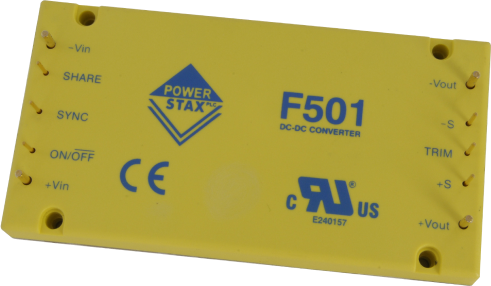
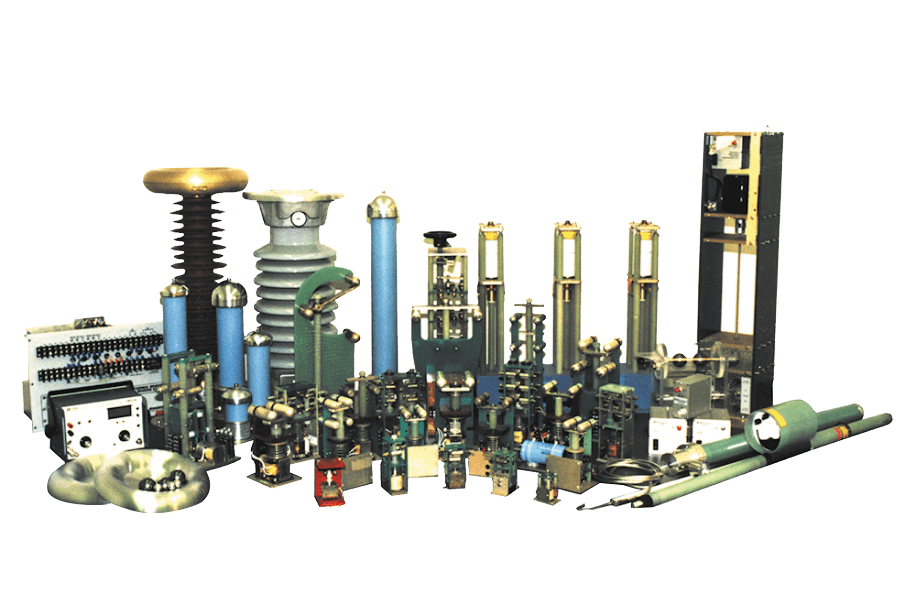
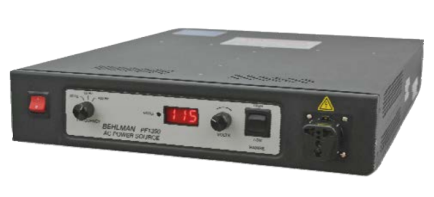
Select from our field-proven MIL-COTS module building blocks, modular AC-DC front-ends, and high-voltage radar power supplies, or leverage our engineering team for modified-standard and custom tactical assemblies.
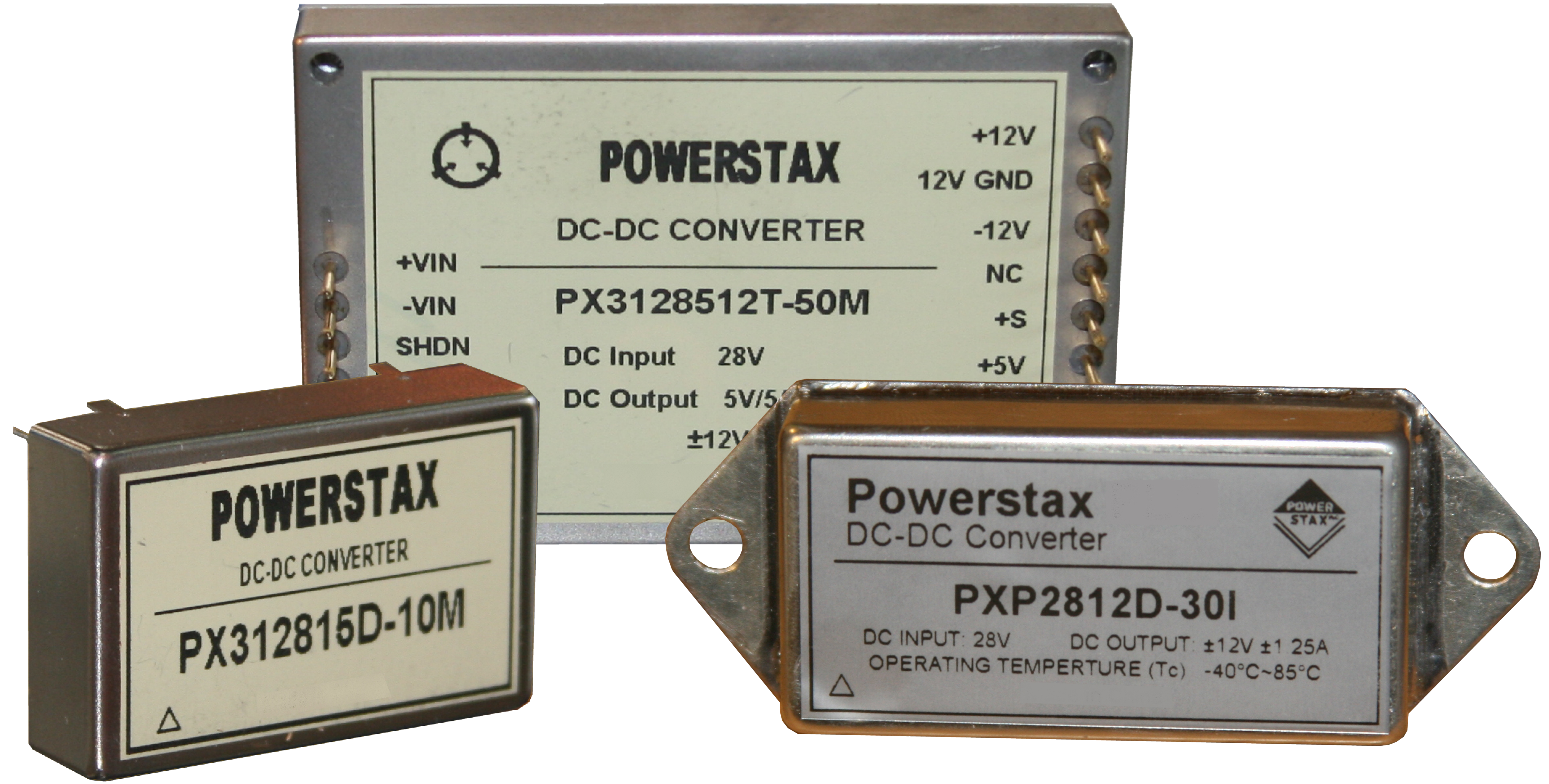
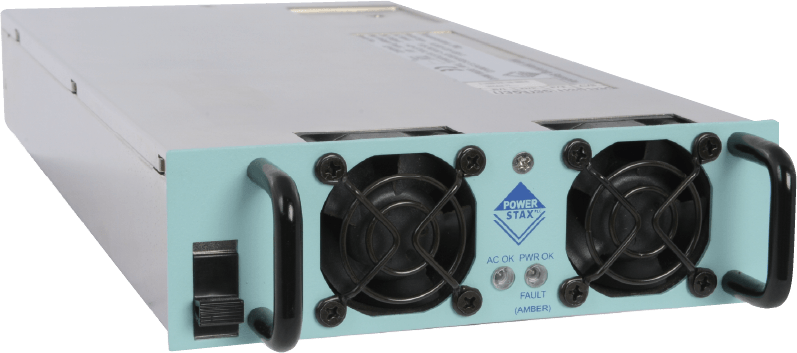
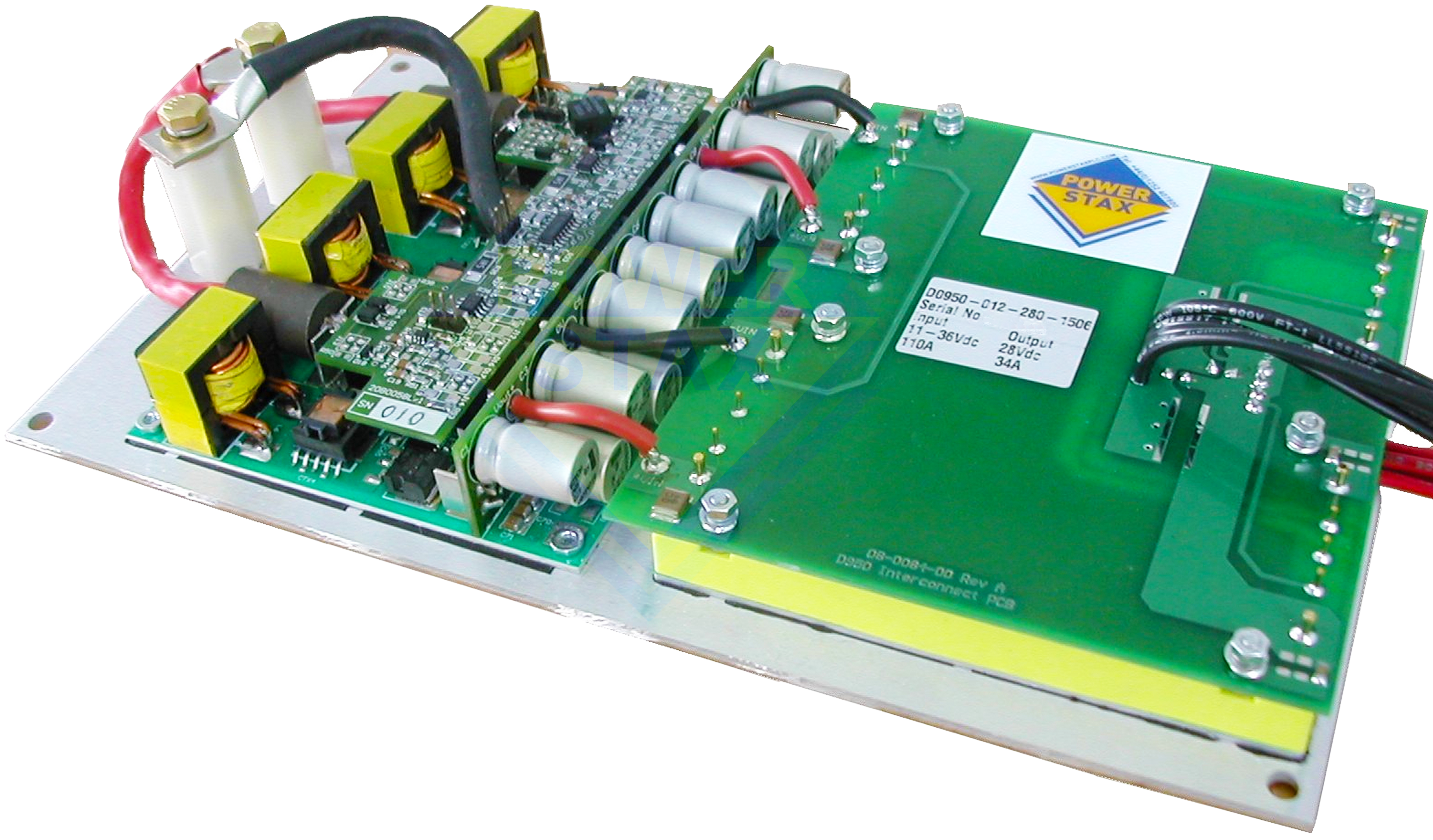
Get immediate access to full technical datasheets, CAD drawings, and MIL-STD compliance matrix documentation.
Get CatalogWhether equipping next-generation armored fighting vehicles (AFVs), naval sonar arrays, or airborne surveillance platforms, Powerstax platforms deliver unyielding performance.
Integrated active surge clamps handling 100V / 50ms transients and 250V spike suppression for 28V DC vehicle power systems.
Airborne power conversion adhering to MIL-STD-704F power quality requirements, featuring active power factor correction (PFC > 0.98).
High voltage DC regulated power modules up to 150 kW and capacitor charging systems up to 40 kJ/s for microwave and directed energy systems.
Full rated power output without derating, designed for conduction-cooled cold plates and fanless IP67 sealed enclosures.
Internal planar magnetics and low-noise switching topologies satisfying CE102 conducted and RE102 radiated emission thresholds.
Fully encapsulated potted packaging resistant to high altitude, operational shock, humidity, salt fog, and mold growth.
As global defense prime contractors transition toward autonomous combat systems, hyper-spectral radar, and high-energy laser payloads, the engineering requirements for military power supplies are undergoing a profound paradigm shift.
Modern defense systems require significantly higher power outputs without increasing spatial footprint or weight budget (SWaP-C: Size, Weight, Power, and Cost). Traditional Silicon MOSFETs and IGBTs are approaching their physical operational limits regarding switching frequency and thermal dissipation. Powerstax is leading the integration of Wide-Bandgap (WBG) materials—specifically Silicon Carbide (SiC) and Gallium Nitride (GaN)—into next-generation military power converters.
GaN and SiC devices enable switching frequencies five to ten times higher than conventional silicon, dramatically reducing the volumetric size of passive magnetics and filter capacitors. Furthermore, SiC operating junction temperatures extend beyond +175°C, enabling defence power electronics to function efficiently in high-ambient combat environments, such as jet engine compartments and tightly packed unmanned aerial vehicle (UAV) avionics bays.
Procurement agencies worldwide, including the US Department of Defense and NATO member nations, are mandating adherence to the Modular Open Systems Approach (MOSA) and Sensor Open Systems Architecture (SOSA) guidelines. Legacy defense programs frequently suffered from proprietary, single-source power architectures that created single-point supply chain vulnerabilities and prohibitive life-cycle upgrade costs.
Powerstax designs its MIL-COTS DC-DC brick converters and 3U/6U rack-mounted power supplies to conform to standardized open-architecture form factors. This modular design philosophy allows system integrators to swap power blocks seamlessly, upgrade power capacities as sensor payloads expand, and drastically shorten qualification timelines for mid-life capability upgrades.
Modern defence power electronics are no longer simple analog transformers; they are intelligent, digitally controlled sub-systems communicating via CANbus, PMBus, or MIL-STD-1553 data buses. Consequently, global buyers are heavily scrutinizing cyber-physical security and supply chain provenance. Powerstax operates strictly within ISO 9001 certified facilities, maintaining absolute supply chain integrity. Component procurement is restricted to verified, non-counterfeit channels with complete lot traceability, safeguarding tactical assets against backdoor vulnerabilities or unapproved component substitution.
Need detailed thermal models, MTBF calculations according to MIL-HDBK-217F, or STEP files for structural integration? Work directly with our UK senior power design team.
Get CatalogDiscover how advanced thermal management, digital loop control, and custom planar magnetics elevate system performance under extreme battlefield stress.
By replacing traditional wire-wound transformers with multi-layer printed circuit board (PCB) planar magnetics, Powerstax achieves unprecedented parasitic reduction, excellent turn-to-turn repeatability, and a profile reduction of up to 60%. Planar designs provide direct thermal pathways to the aluminum cold plate for optimal heat dissipation.
Traditional passive TVS diodes burn excess energy as extreme heat during power surges. Powerstax defense power supplies incorporate active silicon-based surge clamp circuits that regulate transient spikes dynamically, coupled with fast-charge hold-up cap controllers that ensure seamless operation across power interruptions up to 50 milliseconds.
Microcontroller and DSP-driven power control loops allow real-time adaptive frequency adjustment based on thermal load and input voltage fluctuations. Digital power monitoring via PMBus provides real-time telemetry on current draw, temperature, and operating health, enabling predictive maintenance on mission-critical assets.
To resist salt spray, high humidity, shock waves from artillery fire, and corrosive NBC de-contamination agents, Powerstax modules are encapsulated using thermally conductive, low-outgassing polyurethane or silicone compounds, satisfying NASA outgassing standards and MIL-STD-810H shock specs.
Addressing complex engineering inquiries asked by defense procurement managers, system integrators, and military project leaders when choosing power conversion systems.
MIL-COTS (Commercial Off-The-Shelf) power converters are specifically re-engineered to meet stringent military performance criteria without incurring the astronomical costs and extended timelines of fully bespoke defense developments. Standard industrial power supplies are typically rated for 0°C to +70°C ambient operation and lack the transient protection required for military power grids. In contrast, Powerstax MIL-COTS modules feature baseplate operating temperatures from -40°C to +100°C, high-density metal packaging, anti-vibration encapsulants, and internal filtering tailored to meet MIL-STD-1275E (vehicle 28V DC bus) and MIL-STD-704F (aircraft power quality) without requiring extensive external circuitry.
MIL-STD-1275E defines the electrical interface requirements for 28V DC power input to equipment installed in military ground vehicles (such as tanks, armored personnel carriers, and tactical trucks). The standard dictates that equipment must survive severe power disturbances, including 100V voltage surges lasting up to 50ms, voltage spikes up to ±250V for 70 microseconds, reverse polarity events, and severe cranking voltage dips down to 6V DC. Powerstax military defence power electronics incorporate active clamp front-end networks that absorb or clamp these high-energy transients, ensuring downstream payloads—such as tactical radios, weapon control systems, and battle management displays—remain fully operational without damage or reboot cycles.
Achieving compliance with MIL-STD-461G (the military standard for electromagnetic interference control) demands rigorous engineering. Conducted Emissions (CE102) limits low-frequency noise fed back onto the power line between 10 kHz and 10 MHz, while Radiated Emissions (RE102) limits electric field emissions up to 18 GHz. Powerstax mitigates EMI through custom multi-stage common-mode and differential-mode filters, symmetrical PCB trace routing, shield enclosures, and controlled dV/dt switching topologies. When paired with our PX-series EMI filter modules, Powerstax power supplies achieve full compliance, preventing interference with sensitive onboard communication and radar receivers.
Yes. Airborne power distribution systems utilize 115V AC or 230V AC supplies at elevated frequencies of 400Hz or variable frequencies up to 800Hz to minimize transformer core weight. Powerstax designs specialized AC-DC power converters and frequency converters compliant with MIL-STD-704F. Our designs incorporate active Power Factor Correction (PFC) circuitry operating at high fundamental frequencies, suppressing harmonic distortion to under 3% while maintaining high efficiency across varying engine speeds and load conditions.
In combat environments containing sand, mud, water, or chemical agents, cooling fans represent an unacceptable point of failure. Powerstax military power supplies are designed for pure conduction cooling. All heat-generating semiconductor devices and magnetic cores are thermally coupled directly to a heavy copper-clad PCB layer and an aluminum baseplate. The baseplate mounts flat against the system chassis or an external liquid-cooled cold plate. Utilizing high-efficiency topologies (>94%) and low thermal resistance potting compounds, our systems maintain reliable operation even when baseplate temperatures reach +100°C.
Powerstax supports defence OEM clients with complete Factory Acceptance Testing (FAT), Site Acceptance Testing (SAT), and customized environmental qualification programs. We provide full technical qualification reports detailing thermal stress testing, vibration profiles according to MIL-STD-810H, EMC emissions test plots, and MTBF reliability calculations per MIL-HDBK-217F. To request a formal qualification roadmap or request CAD models, click the button below to connect with our defense engineering team.
Powerstax provides full lifecycle coverage for sovereign defense projects. From initial conceptual power architecture design through environmental qualification, volume manufacturing, calibration, and 20+ year repair and overhaul support.
Every defense build is fully documented, tested, and traceable under our UK ISO 9001 certified quality framework.
Get CatalogPowerstax military defence power electronics drive radar, tactical communications, naval sonar, armored land platforms, and ground support equipment worldwide.





Submit your voltage, transient protection, thermal profile, and MIL-STD compliance requirements. Our UK engineering team will provide comprehensive technical evaluation and solution architectures.
Get Catalog